
A new report highlights that publishers need to adopt clear records, AI-specific provisions, and transparent disclosure of AI use to manage legal and commercial risks as the copyright framework around artificial intelligence evolves. Jointly developed by SS Rana & Co and Ficci, the 'Copyright In The AI Age' report emphasises practical governance measures while courts and regulators work on legal principles. It also addresses concerns about authorship, creators' rights, and research integrity amidst increasing AI integration in publishing.

India published 929 generative AI patents in 2024 and 2025 alone -- equating to nearly 70 per cent of the 1,350 patents it published over the entire previous decade (2014 to 2023).

Restoring weighted tax deductions and adopting a petty patents regime can foster firm-level innovative activity critical for competitiveness, points out Nagesh Kumar.

The data for 2009 reveals that Indian firms and scientists filed one-tenth of patent applications filed by their Chinese counterparts during the same period.
Leading Internet firm rediff.com India has won a cyber-squatting case against a Latin American entity for unauthorised use of a "confusingly similar" domain name.

India would join the World Intellectual Property Organization's Madrid System for the International Registration of Marks this year.

China, for example, filed 7,946 patent applications last year, compared to 761 by India.
Francis Gurry is expected to be the new head of the World Intellectual Property Organization. Gurry, who is now a deputy director-general at WIPO from Australia, is understood to have won a nail-biting election on Tuesday to replace the agency's controversial head, Kamil Idris.

India has not accepted the demand of the UK for inclusion of a 'data exclusivity' provision in the free trade agreement, announced on May 6, in a bid to protect the interests of the domestic generic drugs industry, an official said. During the negotiations, the UK had asked to include this provision in the trade pact.

Amid US-China trade tensions and economic vulnerabilities, India must seize the 'China +1' opportunity, deepen reforms, secure FTAs, and globalise its firms for long-term growth, suggests Ajay Shah.
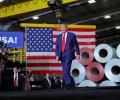
India maintains "high" import duties on a wide range of American goods such as agricultural items, drug formulations, and alcoholic beverages, besides imposing non-tariif barriers, a US report has said. A day before announcing reciprocal tariffs, the US Trade Representative (USTR) released the 2025 National Trade Estimate (NTE) Report on March 31.

India has become the third most innovative lower middle-income economy in the world.

India was the second largest filer of international trademark applications among the BRICS nations in 2014.

A certain segment of the US pharma industry have become vocal about Indian policies on domestic content requirements and IPR.

India had been engaged in a contentious battle with the US over the issue, especially in the pharmaceutical sector.

Sitharaman also highlighted the steps taken by the government to achieve ease of doing business by digitisation of approvals and making more stable policies to make India a favourable destination for investors.

'We realised that partnering with a strong local player like the JSW Group would create far greater value than going it alone.'

The varieties will take at least 4 to 5 years to reach farmers after they complete the usual cycle of breeder, foundation and certified seeds.

Research and development (R&D) spending by BSE 100 companies has grown steadily, rising from 0.89 per cent of revenue in FY20 to 1.32 per cent in FY24, averaging around 1 per cent over the period in-between, according to data compiled from Bloomberg and company annual reports. Also, these companies more than doubled their R&D spending in absolute terms over these five years: From Rs 25,041 crore to Rs 63,072 crore. While this reflects a prioritisation of innovation, corporate R&D investment remains relatively conservative.

The US president alleged that China had been indulging in tremendous intellectual property theft worth hundreds of billions of dollars on a yearly basis.

"India is the best market right now in the world with the digital initiatives the government has implemented

Negotiations for a trade deal between India and the UK have run into fresh controversy, after the proposals under a leaked chapter of the deal on intellectual property (IP) are believed to put access to affordable, lifesaving generic medicines from India at risk. According to the draft IP chapter put out by an international trade portal bilaterals.org, the UK is seeking continuous extension of patent period and rights through small tweaks in the drug, known as evergreening. This may prevent patents from expiring, impacting cheaper drug availability and its production by Indian generic drug manufacturers.
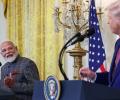
Of Trump's reciprocal tariffs and trade deals

India is not so keen to co-operate with the US on IPR related probe.

With the growing voice of developing countries like India, Brazil and China, the big pharmaceutical firms will not be able to get the WTO's Trade-Related Intellectual Property Rights agreement changed to their advantage, Commerce Secretary Rahul Khullar said in New Delhi.

The government is planning to approach the dispute settlement body of the World Trade Organization against frequent seizure of Indian medicines at various European ports.

The USTR has placed India on its "priority watch" list for two years in a row, saying the country's patent laws unfairly favour local drug makers.

The change of mind among Indian experts is based on a recent decision of the UK high court.

Western drugmakers, including Pfizer Inc, Novartis AG, Roche Holding AG and Sanofi SA, covet a bigger share of the fast-growing Indian drugs market.

China has consistently spent more than 2% of GDP on R&D while India's expenditure on R&D has stagnated around 0.7% of GDP. Can our government shore up resources so that we hit the R&D expenditure target of 2% of GDP set out by the Science, Technology and Innovation Policy of 2013, asks Chidambaran G Iyer, Senior Fellow, Pahle India Foundation.

Prime Minister Narendra Modi on Thursday called for reforming the World Health Organisation and streamlining its approval process for vaccines and therapeutics, and favoured making flexible the WTO's rules relating to trade-related aspects of intellectual property rights.
As the US fights China on issues of intellectual property at the World Trade Organization, India asked Washington on Friday to address the issue of easy availability of pirated Indian films and music in the American market.
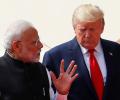
'While criticising India's high tariffs, Mr Trump stated he would impose reciprocal taxes on Indian products if re-elected.' 'However, since India's tariffs follow WTO rules, Mr Trump's actions would violate these rules,' Ajay Srivastava points out.

Under the current administration, political attitudes toward IP seem to have improved.
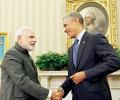
Direct contacts between Obama and Prime Minister Narendra Modi this month helped to end a deadlock that had prevented the WTO from implementing a $1 trillion package of reforms.

Adverse IPR report expected this week;Poor labelling could take fight to WTO

'Today, let us reaffirm our commitment to strive to realise Gandhiji's dreams. His watchwords, truth and nonviolence, will continue to remain relevant for the whole world. He also taught us that rights and duties are but the two sides of the coin - indeed, the true source of rights is duty. Today we recall his lessons in compassion too - compassion not only for our human neighbours but also for our other neighbours, namely, flora and fauna, rivers and mountains.'

India's IPR framework and enforcement were comparable to those in developed countries

The report '2014 International Piracy Watch List,' by International Creativity and Theft-Prevention Caucus highlights the high levels of piracy and the lack of legal protections for copyright in China, Russia, Switzerland and India.
